Tuesday, July 26, 2022

Baseball was a Hit

Teddy finished his first season with Miracle League, and we're already looking forward to next season. I'm so glad we discovered this program and decided to give it a try, even though games are 30 minutes away. This is such a fantastic program that truly makes baseball accessible to kids with all different abilities and disabilities through a team of creative and caring volunteers. The amount of volunteers needed to support 16 teams of kids, each with a 1:1 buddy, not to mention coaches, photographers, umpires and more is a significant number, yet there always seemed to be plenty of helpers with smiles on their faces who love making baseball possible. 

Teddy's buddy Carlie was amazing with him. She quickly learned how to communicate with him and anticipate his moves. She definitely could keep up with him and was part of the reason he had a great season! He also had great coaches, who quickly knew him by name, cheered him on and supported him.

Teddy with one of his biggest fans and his amazing buddy!


This video captures baseball pretty accurately for Teddy. I thought he was coming to say hi to me, but he was more concerned about everyone else in the stands (none of whom he knows).


Wednesday, July 20, 2022

Happy 9th Birthday!

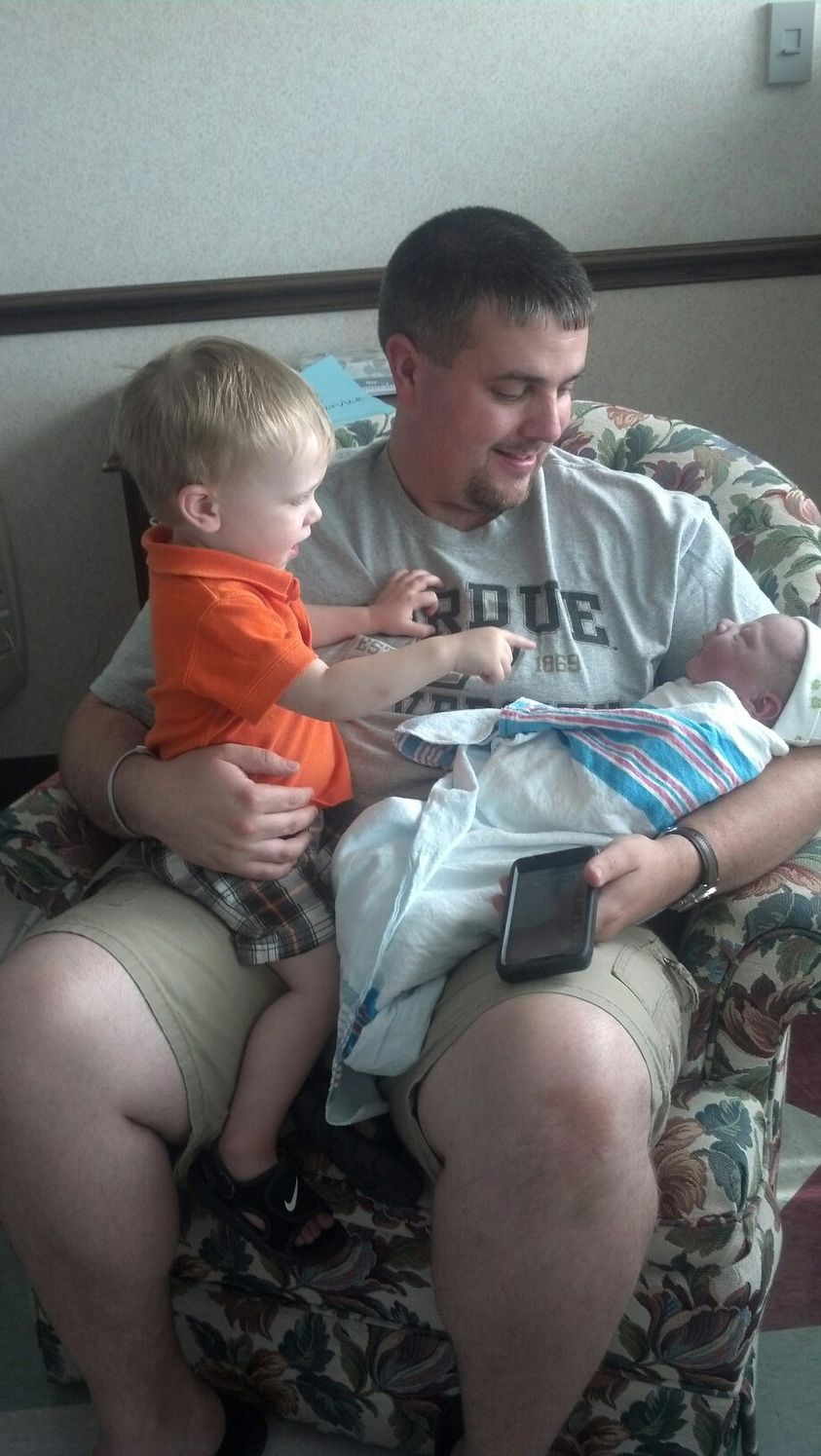
One of my favorite aspects of Facebook is the Memories feature, reminding me of what was shared in past years. I chuckled today when I was reminded of AJ's first impression when he met his baby brother Teddy, "Uh oh." I think AJ accurately predicted life with Teddy before any of us knew any different. 

AJ predicted the future with Teddy.

It's been a wild ride with Teddy, living with the unpredictability and never-ending fear of terrifying seizures, a whole team of specialists including therapists who've worked with him now for 8 of his 9 years, more doctor's visits than I can count, 3 surgeries including one that lasted 7 hours and involved a neurosurgeon, 2 ambulance rides, one ICU stay and God only knows how many concussions. (Seriously, he's never been diagnosed with any, but I'm sure God knows how many he's had because I'm certain he's been concussed.)

Teddy's always up for adventure.

Life with Teddy is not what we imagined, yet we're blessed beyond measure. He lives life in the moment, wants to share the things that bring him happiness and radiates joy. He's changed so many lives, including ours, for the better. He's opened the doors to a world we never knew with other PIGN-CDG families, myTEAM Triumph, I Run 4, SibShop and Miracle League to name a few. There's a whole community that makes his life, and ours, better and more enriching. And he makes our community better by being himself, breaking barriers and preconceived notions about people with disabilities as he makes friends throughout his adventures. He's brought incredible childcare providers into our lives, who've truly become like family to us.

Just another ordinary moment for this extraordinary boy.

Life with Teddy isn't simple, but he gives us the opportunity to embrace the simple things, to be present and just be happy with him. What a gift!

Let's see how many more years this can happen. ;-)

Happy birthday to one of the weirdest, bravest, most determined and joyful people in the world! I'm so lucky you're mine (and that we have a good support system because I'd fail miserably on my own with you. You're definitely one who exemplifies the saying, "It takes a village.")


Wednesday, July 13, 2022

The Science Behind PIGN-CDG

Teddy visited Dr. Morava at Mayo Clinic today for his first annual follow up. She is following him through her natural histories study, and we're so grateful for the opportunity to see and consult with her. She is a world-renowned expert in CDG, and she's absolutely brilliant. She's also phenomenal with Teddy and takes the time to explain things to us in a way that makes sense ... as much as this highly scientific stuff can.

So I'm going to use this blog post to summarize what we discussed, both for the benefit of other PIGN-CDG families and our family but also to help cement the information in my brain. My warning is that this is my understanding and recollection, so anything inaccurate is clearly my error. 

Dr. Morava provided us a chart similar to what she used last time and covered again the basics of GPI-anchoring disorders. Each cell uses sugar chains to build antennas that have protein on top. That is how cells communicate and function together at the most basic level. PIGN-CDG right now is the at the 7th step in the process of building of the sugar chain, with I believe 18 GPI-anchoring CDGs known. So, essentially Teddy's cells start building the sugar chain but stop before the chain is complete. That is why Teddy is globally affected because his brain's cells can't communicate and execute as intended without the proper antenna structure. 

As she explained before, it's a tough diagnosis to develop treatment for because the sugar-chain building occurs deep inside the cellular level, and it's a very specific need. You can't simply provide more of the sugar molecules needed because that's like trying to shovel more snow with a broken shovel ... more does you no good. 

She's aware of the drug-repurposing research we are pursuing with other PIGN-CDG families. She thinks that is a very good thing, not only for PIGN but also for potentially other PIG CDGs and GPI-anchoring CDGs. The goal with the GPI anchor disorders will be to target drugs that can cross the blood/brain barrier, as that is where they will need to do their work. 

Dr. Morava is extremely familiar with drug repurposing, as she is involved with drug repurposing for the most common CDG, PMM2. They started approximately 4 years ago and are just now approved for clinical trials. Believe it or not, that's extremely fast for the use of a drug. They actually got rare direction from the FDA to skip phase 2, which is an extended study of the safety of the drug in patients, and move right to phase 3, which is a controlled test with both drug and placebo. Dr. Morava explained there's both pros and cons to that situation, and it's not the normal process but happened due to the known safety of the drug as it's been in use for 40 plus years. In the PMM2 study, they saw improvement in the earlier testing in about 80% of the cases. They started with yeast cells, just as we intend to, and then moved on to worms and then skin biopsies. 

Dr. Morava said that with drug repurposing they can test 200 known drugs at a time to work their way through the 2,000 FDA-approved drugs. There is a difference between what is approved in the US and what is approved in other countries. So clinical trials may not cross country lines perhaps, but they can do work in parallel with other countries. For example, there are some studies where they hand off the different stages. This can be helpful as there are limited CDG experts. In the US, there are 4 (Dr. Edmundson in Philadelphia, Dr. Lam in Seattle and Dr. Scaglia in Baylor whose plate is full, in addition to Dr. Morava). 

Dr. Morava said one of the challenges with drug repurposing is identifying the biomarker to test. One possibility may be the truncated GPI anchor, but they need to identify something they can clearly measure in each of the tests to see if there's improvement with each drug. 

Another type of potential treatment aside from drug repurposing that does get a lot of attention is gene therapy. There's excitement over that possibility for PIGA as that type of gene therapy already exists in animal models for that gene. If you've heard of CRISPR, that's gene therapy. Essentially gene therapy changes your genetic makeup forever, which is great in the sense of correcting a damaging mutation. However, the long-term impacts aren't known yet because it's such a new therapy. There is the possibility that the genetic rewrite to fix one gene may create other issues, so Dr. Morava cautioned that while it may make sense for diagnoses with no hope, she doesn't view it as the best option for PIGN, particularly individuals like Teddy who are doing well.

The last type of potential treatment we discussed is the idea of using MRNA, which would essentially be temporary genetic therapy. You've all heard of MRNA, as that's how the COVID vaccines were developed. The idea with MNRA is that you inject the correct version of the gene to build the sugar chain and protein correctly. The advantage of this type of therapy is that it should work on all PIGN individuals, regardless of the specific and different mutations. (That's one of the weird things about PIGN is that most of our children have different mutations ... they're all messed up but in a lot of different ways.) The reason is you're simply overwriting whatever the error in the code is with the correct code. The disadvantage of MRNA is that it's temporary. It only lasts about 2 weeks, so it would be a continual process. However, that's also an advantage in the sense that if detrimental side effects are noticed, the process can be stopped and things go back to baseline. (Although Dave and I talked about how incredibly hard it would be to see progress and then regression.) 

The MRNA is being tested in terms of proof of concept with a glycogen storage disease. It's not a type of CDG, but it is another glycosylation disorder. It will be interesting to see and learn what happens.

Of course, all these treatments are literally years down the road. But it's exciting that science is happening, and that people are interested in GPI anchor disorders and these types of CDGs. That's the biggest challenge is finding the right people to be interested and champion for our children by doing the work. 

The main focus Dr. Morava has currently in her research is biomarkers to diagnose CDGs with a biochemical diagnosis rather than a genetic array that results in likely pathogenic results. Right now we have a likely pathogenic result for Teddy from his genetic testing that indicates that his PIGN mutations are likely the cause of his symptoms and disorder. Her focus, with a study of 200 patients, is to develop a blood test that will provide a functional diagnosis for CDGs. This would also, at least in my mind, provide biomarkers that can be used in further research, drug testing and treatment development.

Whew, that is my entire page of notes around the very complex chart she provided, in addition to the much simpler GPI anchor chart she gave us. I haven't touched the 20-page booklet of GPI Anchor Disorders: A Subtype of Congenital Disorders of Glycosylation, but I will. Also, as soon as I get a digital version of that, I'm happy to share it with you if you're interested in learning more (and will share it on our PIGN page.)

Teddy loves to visit Dr. Morava ... and he "locked" the dietician in the corner. 


Monday, July 11, 2022

My view, Fidgets, and Skiing

Hello everybody, This is AJ. I am Teddy's Brother and I wanted to share three cool things with you. I hope you enjoy what I've got to share.


I love being Teddy's big brother. Teddy is great at smiling and cheering you up. I've got to do many amazing things with Teddy like watching him waterskiing, going tubing with him, going to the movies, going to the zoo, and so much more. With Teddy Life is an endless adventure. He is the best brother that I could have wished for.


On Friday Teddy had the amazing chance to go waterskiing with Graceful Wakes and volunteers from Rock Aqua Jays. I was able to photograph Teddy waterskiing here are some of my photographs. It was amazing and I am very grateful for the opportunity to do it.


Also in the last post my mom said how I was selling fidgets as she said I am selling fidgets to fundraise money for a possible treatment to help with seizures. They are $10 a piece and I have the colors Gold, Glow in the Dark, Copper, Silver, Red, White, Black, Green, and Rainbow Glow in the Dark. If you want to  order fidgets go to https://forms to order.


Here are my photos!

YAY That was fun!

Where almost done.

Comin in HOT!!!
Where off!

See ya later.


Friday, June 24, 2022

Fidgets and Fundraising

Teddy's older brother AJ has a huge heart and wants to help fundraiser for the PIGN-CDG treatment research project. He brainstormed a list of fundraising ideas and started with selling 3-D printed fidgets. 

You can watch his fundraising appeal here: https://m.facebook.com/story.php?story_fbid=pfbid046jFT47ZmxpXzrFugmc8ZJHAgDL7Zfte4aKvjULMuxsErjUhjHRKykQnn9Kiu28tl&id=507467621&sfnsn=mo

He's offering fidgets in a variety of colors for $10 reach with local pickup/delivery in Oshkosh. I'm also in Green Bay weekly and can coordinate pickup/delivery there. Otherwise, we're happy to mail fidgets for the actual mailing costs. He's using his own supplies, so each $10 fidget price goes entirely to the research project. You can order here: Fidget Order Form

If you prefer to share directly to the fundraiser to get your tax-deductible receipt, you can do so here: https://secure.givelively.org/donate/cdg-care/finding-a-treatment-for-pign-cdg/kerry-blondheim

AJ is an awesome brother.


Friday, June 17, 2022

PIGN-CDG Research - We're Fundraising!

When we got Teddy's diagnosis back in 2015, it was an extremely bleak prognosis with no treatment plan because none existed. Seriously, we were referred for a handful of tests to make sure he didn't have issues with his heart or his kidneys because the research papers indicated those systems could be affected. But that was the extent of what we gained from his diagnosis from a medical standpoint. 

More than a decade after PIGN-CDG was first diagnosed, no treatment exists. The reality is that so few people are diagnosed with PIGN-CDG (less than 100 known cases) that there's minimal interest in researching PIGN-CDG, much less researching and developing treatments. However, we have a unique opportunity to have a team research treatments for the disorder.

We first connected with Ethan Perlstein of Perlara through the World CDG Conference. Another PIGN family spoke to him, gauged his interest and availability to work with our disorder and coordinated a call for other PIGN families. Perlara has worked with other families and organizations to development treatment models, probably with the most well-known and promising one that I'm aware of being Maggie's Pearl for a different type of CDG. 

In essence, there's not a single genetic mutation that results in PIGN-CDG. A handful of known affected individuals share the same mutation, but even within the same family the mutations can manifest differently. In Teddy's case, part of his gene from Dave was missing a piece whereas part of his gene from me had broken apart and reattached in the wrong location (a splice site). 

Scientifically speaking, the PIGN gene is a common gene that is found in many other organisms, including yeast cells. This allows scientists to replication the mutations in yeast cells and then perform testing on the yeast cells. They can test existing drugs on yeast cells to see if they find promising results and can repurpose an existing medication to actually treat PIGN-CDG rather than just treating the symptoms that result from the disorder. (Tmost common and significant treatment is often for seizures, although many have a multitude of medications to manage a variety of symptoms). 

This research is truly about doing the science and seeing where it takes us. There is no cure for CDG and likely will never be. There is not even a guarantee at finding a treatment. However, this is the single best hope we've seen in the decade since PIGN-CDG was discovered to find a treatment. 

We don't know if this will result in a treatment that benefits Teddy. There's a possibility, although the skeptical side of me acknowledges it's more likely that a treatment will help other PIGN individuals more than Teddy who are more severely affected. Yet, it's an opportunity to help others, to give hope and to perhaps make this road easier for others in the future ... and best case scenario easier for Teddy. 

So we're going to be diving into fundraising efforts in the next couple months. The researchers at Perlara have limited capacity for projects, and we just squeaked in with the PIGN project. The trick now is to raise the funds necessary to do the first two phases (develop the yeast cells and begin drug repurposing testing) in short order. We do need to act quickly, so that we don't lose essentially our place in line.

I'll share more in the upcoming weeks on fundraising opportunities, but I'm starting with simply sharing our fundraising page: CDG CARE (givelively.org) Your donation is tax deductible. Please consider a donation or share this post with others to raise awareness.

If fundraising is your jam and you're interested in helping in this adventure, please let me know. I'd be happy to chat with you, even if it's to learn from you. 

Perhaps we should do accordion concerts for donations. If you don't pay to join the concert, I'm sure you'd donate to end the concert!


Thursday, June 16, 2022

It's Been 3 Years

It's been 3 years since this: 


I'm so grateful that Teddy is quite healthy despite his CDG-PIGN diagnosis. Unfortunately there are others with the same diagnosis who struggle with seizures daily, and we can celebrate milestones like 3 years since his last seizure. Seizures suck. They're scary. They can be life threatening. They can land us in the ICU (once is enough to realize it can happen again). They can rob our children of their skills and progress. Yet, unfairly enough, so can the medicines to prevent and treat seizures. It's a constant challenge to manage the seizures to help our children be their best selves, and we know we're lucky that Teddy's seizures are few and far between. 

In the next couple weeks I'll be sharing more about a really exciting research project, using science to explore treatment options for Teddy's diagnosis. I'm so excited about the possibilities, not so much to benefit Teddy but to help those who are more severely affected, who struggle each and every day with things that even we take for granted. 

But for now, we'll celebrate that it's been 3 years since our last ambulance ride, sleepless night in the hospital (as there have been other sleepless nights) and sheer terror. We'll take his smiles, sass and spunk any day over seizures.